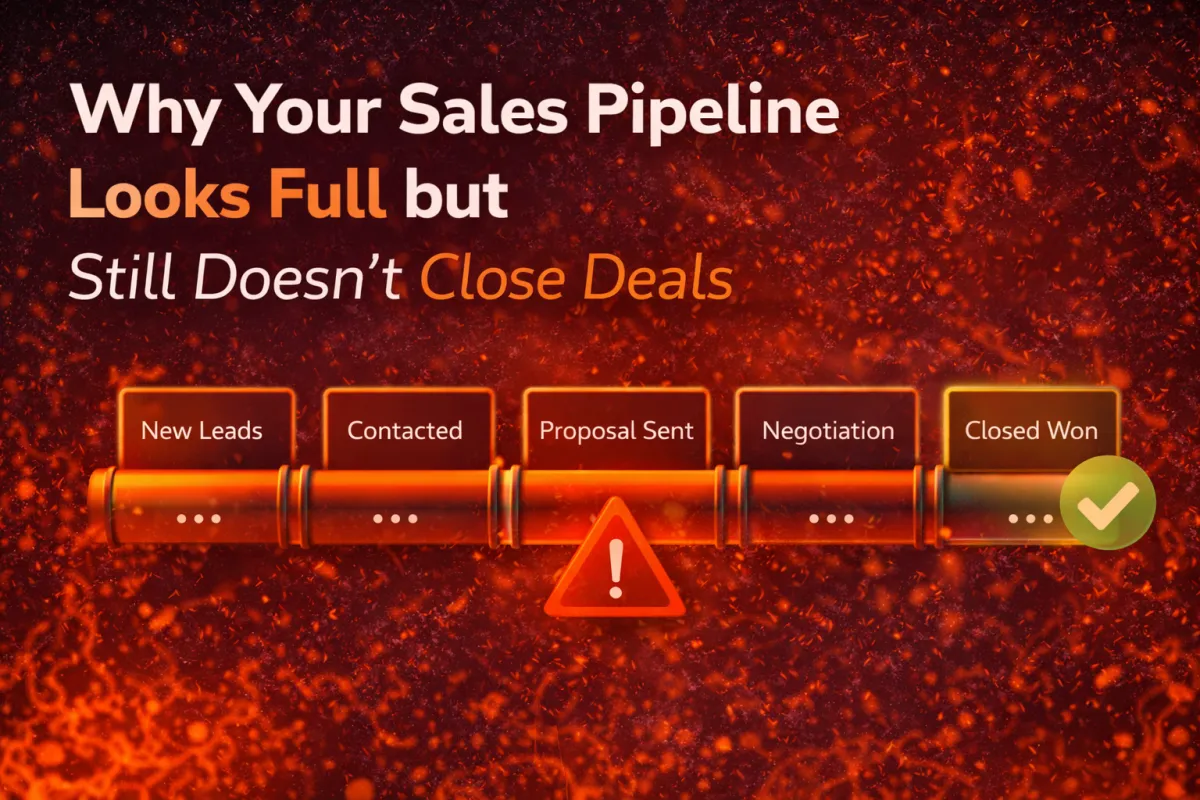
Why Your Sales Pipeline Looks Full but Still Doesn’t Close Deals
Why Your Sales Pipeline Looks Full but Still Doesn’t Close Deals
A full pipeline should feel exciting.
Instead, for most businesses, it feels frustrating.
Deals stall.
Follow-ups drag on.
Forecasts are unreliable.
Everyone says the same thing:
“We have a lot in the pipeline, it just needs time.”
Time is rarely the problem.
Structure is.
The Biggest Lie in Sales: “It’s Just a Timing Thing”
Timing does matter.
But when most deals fail to close, timing is not the root cause.
The real issues are:
Leads enter the pipeline too early
Stages don’t represent real intent
Follow-up depends on humans
No clear action is tied to pipeline movement
A pipeline without logic is just a list.
If you want to see how CrowdConverts builds pipelines that actually drive action, start here:
👉 https://crowdconverts.com
Why Most Sales Pipelines Are Built Wrong
Most pipelines are built like this:
New Lead
Contacted
Follow-Up
Proposal Sent
Closed
Looks clean. Converts terribly.
Why?
Because none of those stages answer the only question that matters:
What should happen next?
A real pipeline is a decision engine, not a tracker.
Pipelines Should Trigger Behavior, Not Store Leads
A working sales pipeline does three things:
Signals priority
Triggers follow-up automatically
Protects the calendar from low-intent conversations
If a lead moves stages and nothing happens automatically, the pipeline is broken.
CRM pipelines should:
Trigger messages
Assign tasks
Change follow-up intensity
Route leads correctly
Without automation, pipelines decay fast.
The Silent Revenue Leak: Stalled Deals
Most revenue dies in the middle of the pipeline.
Not lost.
Not closed.
Just… stalled.
Stalled deals usually mean:
No urgency was created
No follow-up cadence existed
The prospect didn’t know the next step
The salesperson waited instead of guiding
A pipeline should apply pressure without sounding pushy.
Automation does that better than people ever will.
Why Pipeline Automation Changes Everything
Pipeline automation removes guesswork.
Instead of asking:
“Should I follow up now?”
The system decides:
When to follow up
How to follow up
What message to send
When to escalate or deprioritize
This is how pipelines start closing consistently instead of unpredictably.
If you want help implementing this correctly, book a call here:
👉 https://crowdconverts.com/book-here
The Difference Between a Busy Pipeline and a Healthy One
A busy pipeline has activity.
A healthy pipeline has momentum.
Healthy pipelines:
Have clear exit criteria for each stage
Move leads forward or out quickly
Focus on booked calls, not vague interest
Produce reliable weekly numbers
If your pipeline requires constant meetings to “review,” it is compensating for poor structure.
How Sales Pipelines Connect to Booked Calls
Booked calls are not separate from the pipeline.
They are the gateway into it.
A proper system:
Qualifies before calls
Routes only the right prospects
Moves deals forward with intent
Removes low-probability clutter
This protects your time and improves close rates.
For more system-level breakdowns like this, visit the blog hub:
👉 https://blog.crowdconverts.com
Why Most CRMs Don’t Fix This Automatically
CRMs are tools.
They don’t fix broken thinking.
Without intentional design, a CRM:
Mirrors bad sales habits
Encourages manual follow-up
Gives false confidence
Implementation matters more than software.
This is why many businesses feel disappointed after “setting up” a CRM.
Want a Pipeline That Actually Closes?
If your pipeline looks full but revenue feels stuck, you don’t need more leads.
You need:
Clear stage logic
Automation that enforces momentum
A system designed around booked calls
Book a conversation and we’ll show you exactly where deals are dying and how to fix it:
👉 https://crowdconverts.com/book-here
To learn more about how CrowdConverts builds sales systems that convert intent into revenue, visit:
👉 https://crowdconverts.com
